Thursday, April 24, 2014

Foraged Spring Stracciatella with Nettles & Field Garlic


Spring foraging should be well underway mid-April, but it's a week or two late this year. So I came up with this dish as a way to make the most of the small edibles one can find just starting to come out here and there.

Field garlic: the tube-like leaves are hollow
and smell strongly of garlic when broken
Traditional stracciatella is made with spinach, and has a very mild flavor, so henbit, deadnettle, or lambsquarters (when they start to come up) would be great, but I wanted something with a bit more of an herbal punch--and these greens, a mix of bitter (dandelion), pungent (field garlic and ramps) and sweet (nettles) satisfied my craving for the flavors of spring. But the recipe isn't exact, feel free to substitute whatever comes your way or strikes your fancy.

The base recipe is vegetarian. I added pasta and Italian sausage to the dish to make it a main course meal. You could leave both out, and make it a starter course or light lunch. Or you could replace with cannelloni beans and make it gluten-free and vegetarian. If you have a little more time on your hands to run to the bakery, serving the soup with some whole-wheat bread and ramp butter would be amazing!

Monday, April 14, 2014

Spring is Springing, and so are the Edibles


Young Ramps just starting to peek out.
Hello! Did you miss me? I wasn't the best blogger last fall, and I certainly was absent all winter. I had plans too. . . I was going to do book reviews during the winter months, but I just couldn't get excited about writing them. No more promises this year. . .I will post when I have something to share, and I won't when I don't.

Anyway, spring is back, kind of--due to the harshness of the season, it's about 2 weeks behind where it usaually is right about now.

If you are new and curious, now is actually a good time to start getting into foraging. Edibles aren't quite as abundant or as large as they will be in a couple of weeks, but they are in some ways easier to spot, as they generally come up earlier than cultivated plants. Of course, they are also harder to ID, since most websites and books don't show the young plants, they only showcase mature specimens.

With that in mind, there are some photos I would like to share, which showcase some of the things popping up right about now,

Before I begin, I want to reiterate the ground-rules. Proper identification is the responsibility of the harvester. I am giving you clues and tips as to how I identify things, it is your job to confirm them with reliable sources to your own satisfaction. If you are ever in the slightest doubt about a plant or mushroom--don't eat itAlso, don't harvest edibles from areas that may be contaminated. This would include areas that may have been exposed to pestasides, fungasides and weed-killers, areas near highways or busy streets, areas that may have had industrial or chemical run-off, and areas frequently trafficked by people walking their dogs. Finally, this guide is for Early Spring (usually late March to early April) in the Northeast, only! That is to say, New England and the Mid-Atlantic states, and north to Ontario and Quebec in Canada. What grows in your spring might be totally different. Even in the Northeast, remember to factor in "early" and "late" spring conditions.

Friday, October 18, 2013

Foraged Recipe: Vegetarian "Chicken" Mushroom Tsukune


It has been forever since I have blogged. I have been feeling really down for the past month and more, in part because of things like work, but also because I have been just feeling very run down. I have every hope that things will turn around within the next few months, however, and I am trying to stay upbeat. My wonderful (in terms of picture--not performance) camera is also on the fritz, again, so that isn't helping. It seems to preferentially like to fail in the field, where I can't immediately address the issue. I also have the world's cheapest phone, so my camera phone pics have been less than stellar.

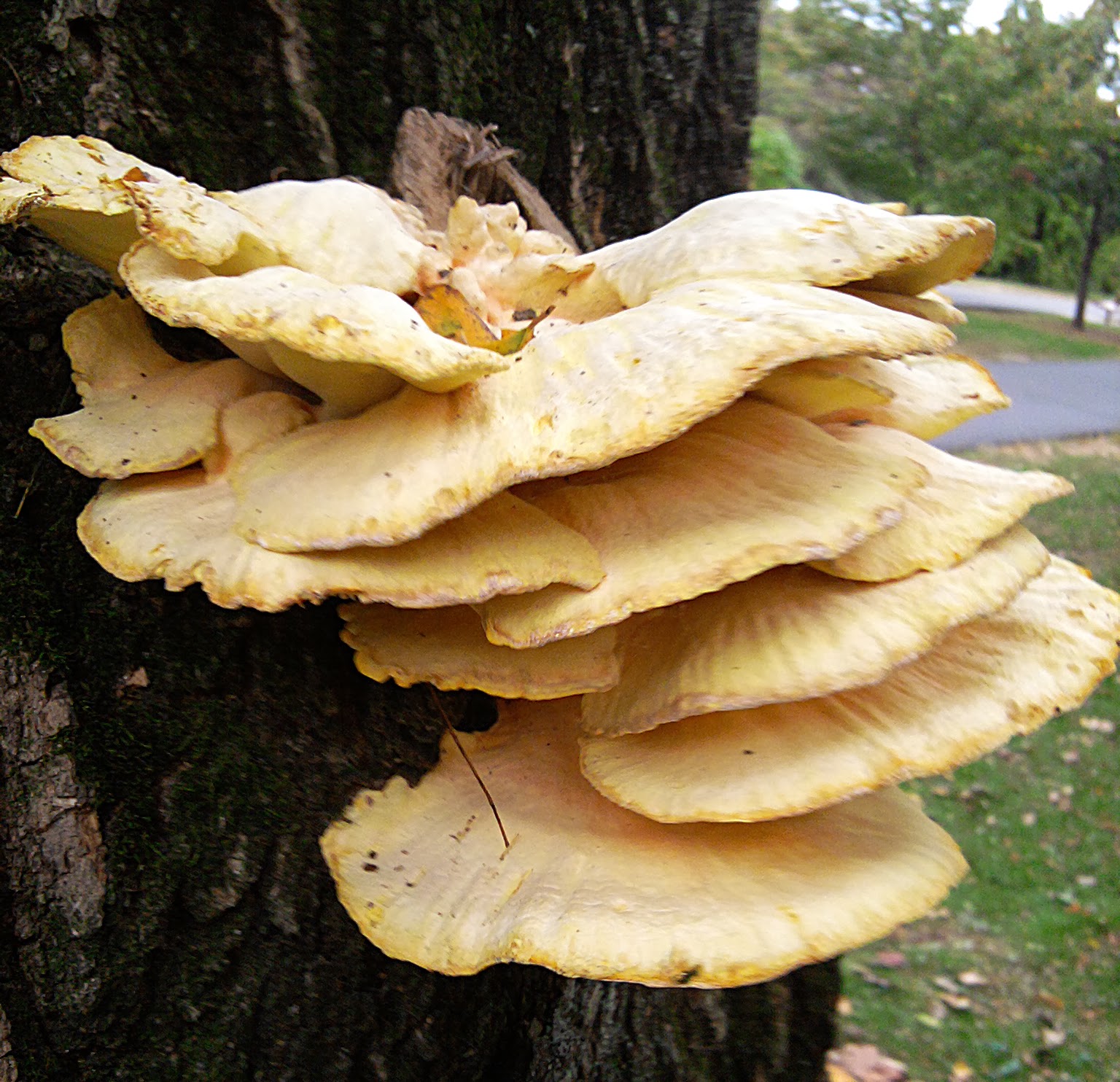
Back in the spring I predicted that this would be an insane year for the Chicken Mushroom, or Sulfur Shelf, Laetiporus sulphureus. And indeed, it has been. . .for everyone else. Somehow, throughout all of September, I have managed to just miss every single one of my chicken mushroom patches, and shown up a few days to a week late, to find a rotting, buggy mess. I missed out on easily over 100lbs of choice mushrooms this year, just from going to the wrong spots on the wrong days. It's a shame, because, in addition to being delicious, chicken mushrooms are extremely versatile.
Case in point: easily 30+ lbs of mushroom that was decayed
and full of bugs, and there was more on the other side of the log

A little old and dried out, and the edges needed
to be trimmed--but at least it wasn't buggy.
(shot with my phone's camera)
Anyway, last Sunday I found a smallish haul of Chickens. They were a couple of days past their prime, somewhat dried out, and with the edges starting to mush. Any other year, I would have passed them by. This year though, I was desperate. At least, since this is October, they hadn't gotten buggy yet, and simply needed to be revitalized. I was determined NOT to be disappointed, and decided to view the somewhat dried out mushrooms as a challenge.

I am glad I did, as this dish proved to be just what I needed to cheer myself up--easily rivals buffalo "chicken" mushroom for my favorite dish with this fungus.

Tuesday, September 10, 2013

Foraged Wood Sorrel Custard Pie

If you can get past the strange look, this pie is mighty tasty

Wood sorrel (Oxalis species) holds a special place in my heart. It always feels like the first wild food I ever ate, even though it really isn't. Ever since I can remember I picked berries with my mother, or chokecherries with my grandmother.

But wood sorrel was different. No member of my family ever pronounced it as safe, I never picked it with them. Rather, I learned it was edible from other children, who called it lemon clover. I ate it without hesitation, rather a dangerous precedent when your "expert" is an 8-year old, but it all turned out all right in the end.

Apparently my experience was typical; magically wood sorrel is enjoyed by children, who teach it to other children, and then somehow forget they ever ate it when they become adults. Sam Thayer tells of children all over the country delighting in this simple weed, and sharing their enjoyment with others. It goes by many regional names, lemon clover, lemon grass, sour clover, sour grass, and, apparently "juicies".