Showing posts with label cap/stalk. Show all posts

Sunday, May 29, 2022

Beginner foraging: old man of the woods mushroom identification


Identification difficulty: Beginner

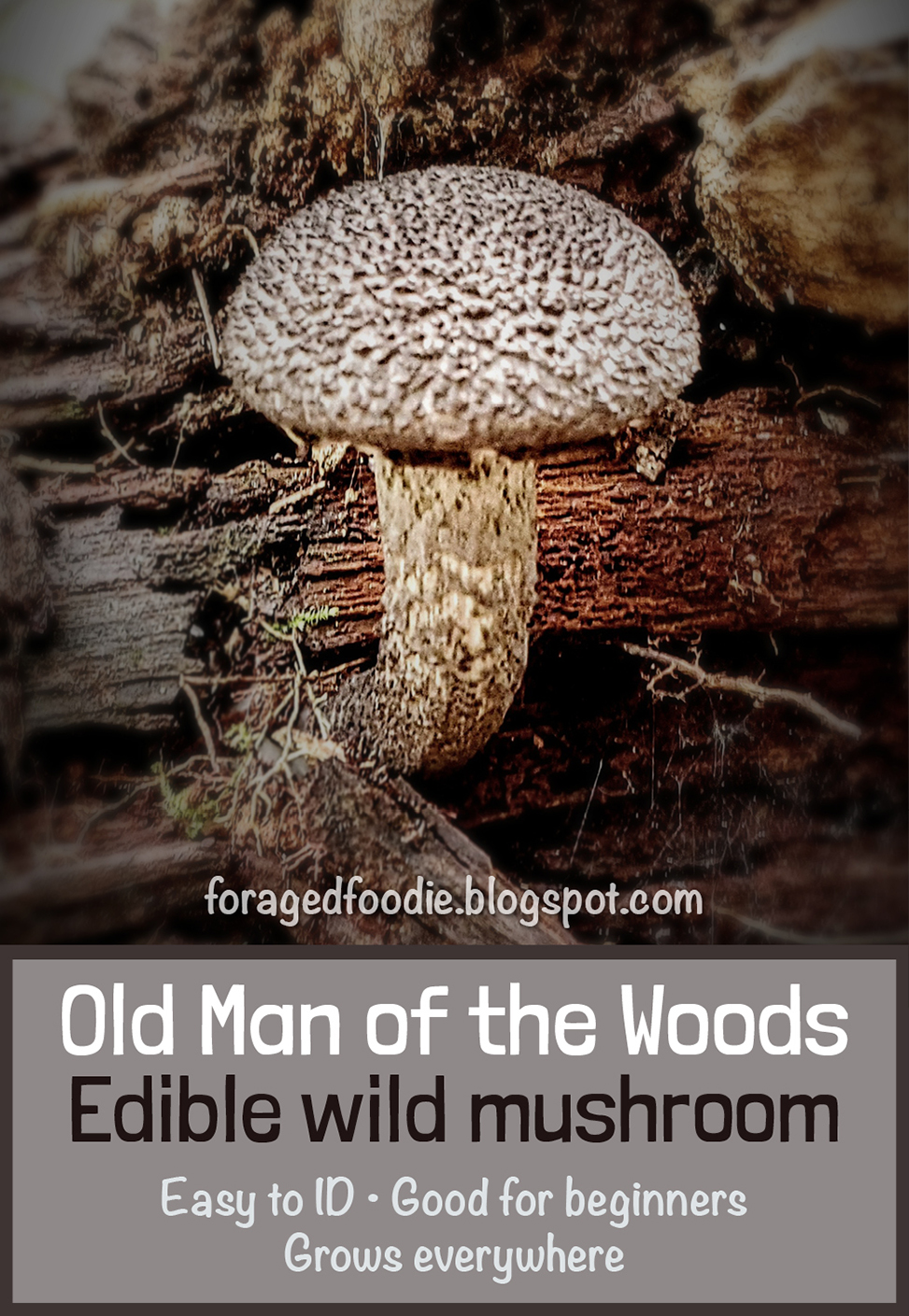
Meet the old MEN of the woods, "Strobilomyces strobilaceus" (though most books will use the term Strobilomyces floccopus) and Strobilomyces confusus. 

Old MEN, you ask? Yes, in the Americas the common name "old man of the woods" is often used interchangably for two different species of Strobilomyces that look rather similar. And there is still a different "old man of the woods" in Europe and Asia.

Confused yet? The naming gets worse.

The Latin name Strobilomyces strobilaceus applies only the European species. DNA studies have shown that the American mushrooms--previously believed to be identical--are genetically different, but a Latin name hasn't been chosen yet. 

From a foraging and edibility standpoint, none of this matters. All species share the same identification features, but if you're curious about species naming, check out the taxonomic confusion section at the end of this post. 

Old man of the woods identification
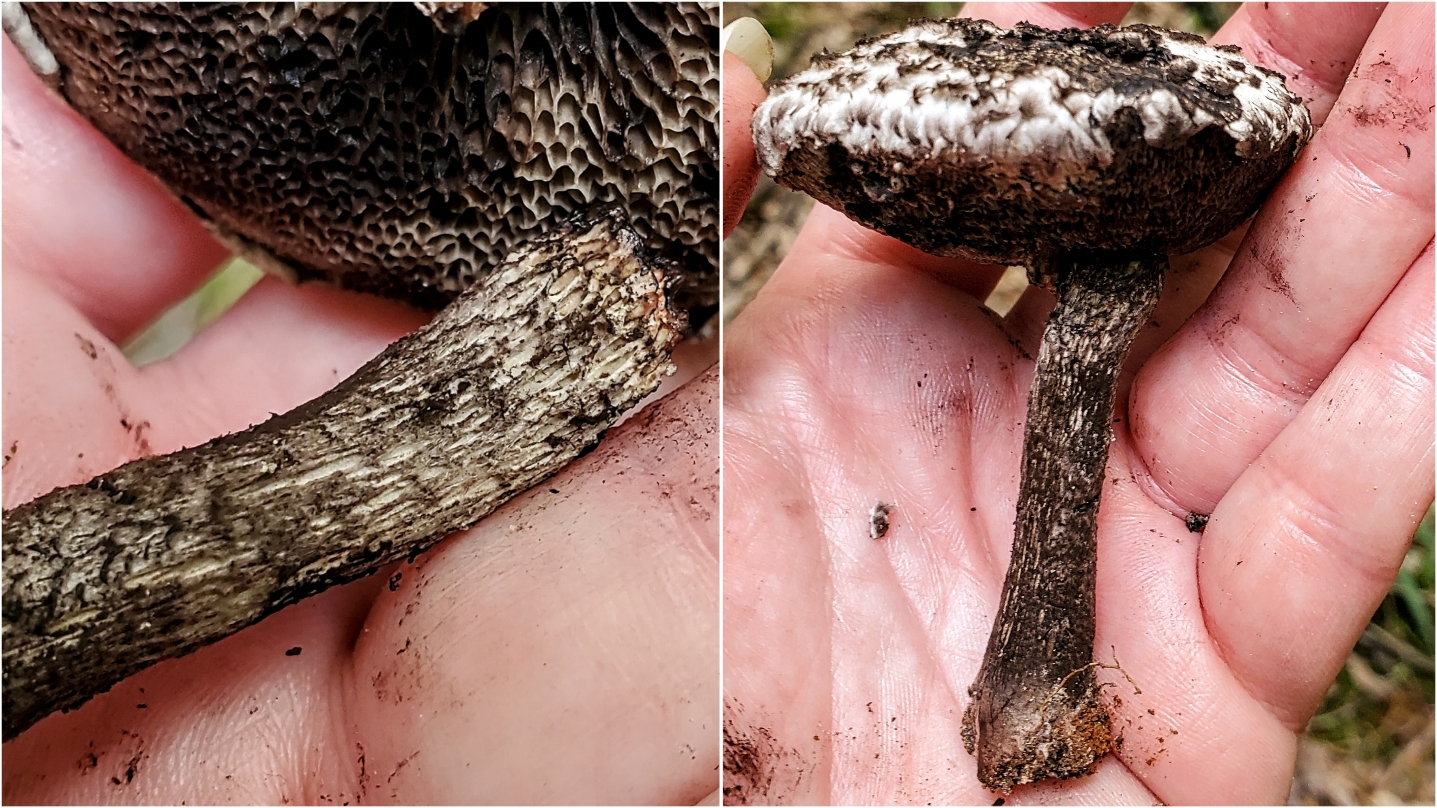
  • A cap and stalk mushroom 
  • Pores under the cap instead of gills.
  • Mushroom cap is light gray with dark gray to black textural elements. Textures can resemble large gray/black "flaps" that hang down (S. strobilaceus), or small gray/black pyramids that stick up (S. confusus). 
  • Pore surface is pale gray to charcoal gray to black. 
  • Pores aren't round, instead they are angular polygons, often elongated.
  • Stem is also dark gray or black and textural, with dark scales along most of the length.
  • Entire mushroom bruises pink or red when bruised or cut. This color slowly fades to gray or black. 
  • Found in the woods, growing terrestrially (on the ground) or on logs so well-decayed they are basically soil.

That's really all there is to know about identification, this really is an easy group of mushrooms to ID.

Saturday, December 4, 2021

The velvet foot or velvet shank mushroom: Flammulina velutipes. Identification tips and toxic look-a-likes


Caution: this is NOT A BEGINNER's mushroom.

This mushroom cannot be positively identified by observing features alone. A spore print must be made for positive identification. This mushroom has many lookalikes, some of which are deadly, others will make you sick. Use the following tips as a guideline only, but confirmer your identification with other reliable sources and a trusted local expert.


As always, it's your responsibility to make 100% sure of any while plant or mushroom you consume.


Identification difficulty level: Intermediate

Flammulina velutipes, commonly known as the velvet foot, velvet shank, velvet stem, or winter mushroom, is officially a cold-weather fruiting fungus, which can be harvested even in the dead of winter in some places. This makes it a great find for winter survivalists, or for any forager who just can't get enough, and wants to hunt year round.


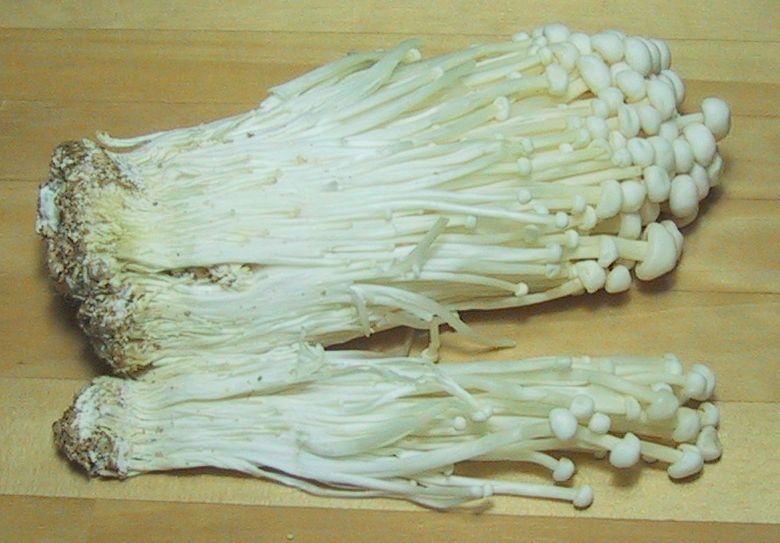
Cultivated Flammulina velutipes, called enoki mushrooms.
Image courtesy of Wikipedia user Chris 73, via Wikipedia Commons


Do you know the enoki mushroom?

If you know the skinny white enoki mushrooms you buy in the store, then you actually know the velvet shank, kind of. The enoki is also Flammulina velutipes, but it's cultivated in very specific ways, to make it look, and in many ways taste, like a different mushroom. By growing it in complete darkness, it turns white instead of cinnamon brown, and forcing the stems to grow long and skinny keeps them tender, where in the wild they are tough and chewy. 

Despite the more tender texture of the cultivated variety, I GREATLY prefer the stronger, more umami flavor of the wild version. When cultivated they become tender and mild, but wild they are a very exciting mushroom, with a very meaty texture and a buttery, nutty flavor. 

Keep reading to learn more on how to accurately identify the velvet foot mushroom, and avoid the very similar-looking, DEADLY Galerina.